HOW IT STARTED
The renovation story behind the Design Studio — and the method that came out of it.
MELROSE HOME & CO. · AUGUST 2026 · 8 MIN READ
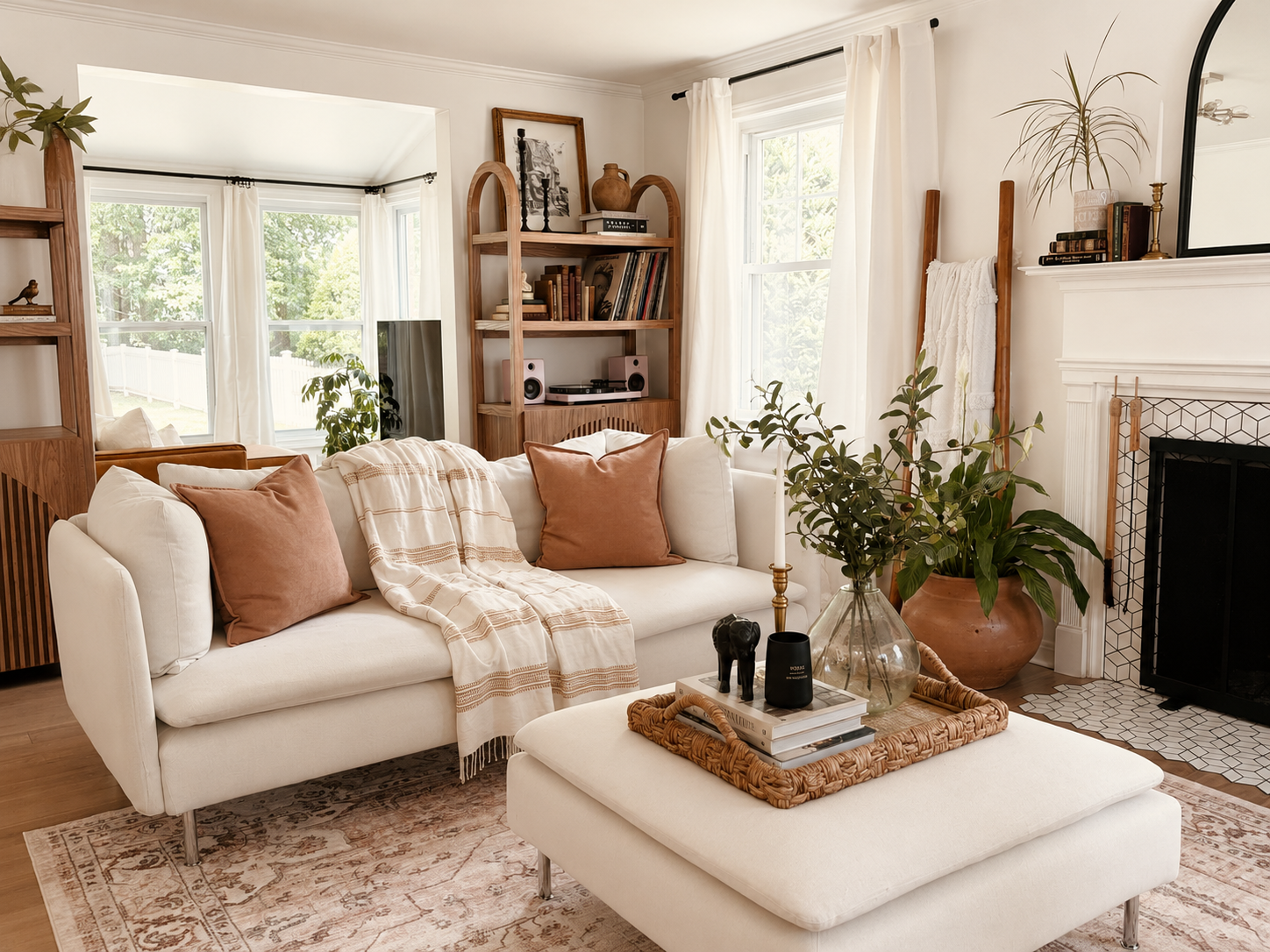
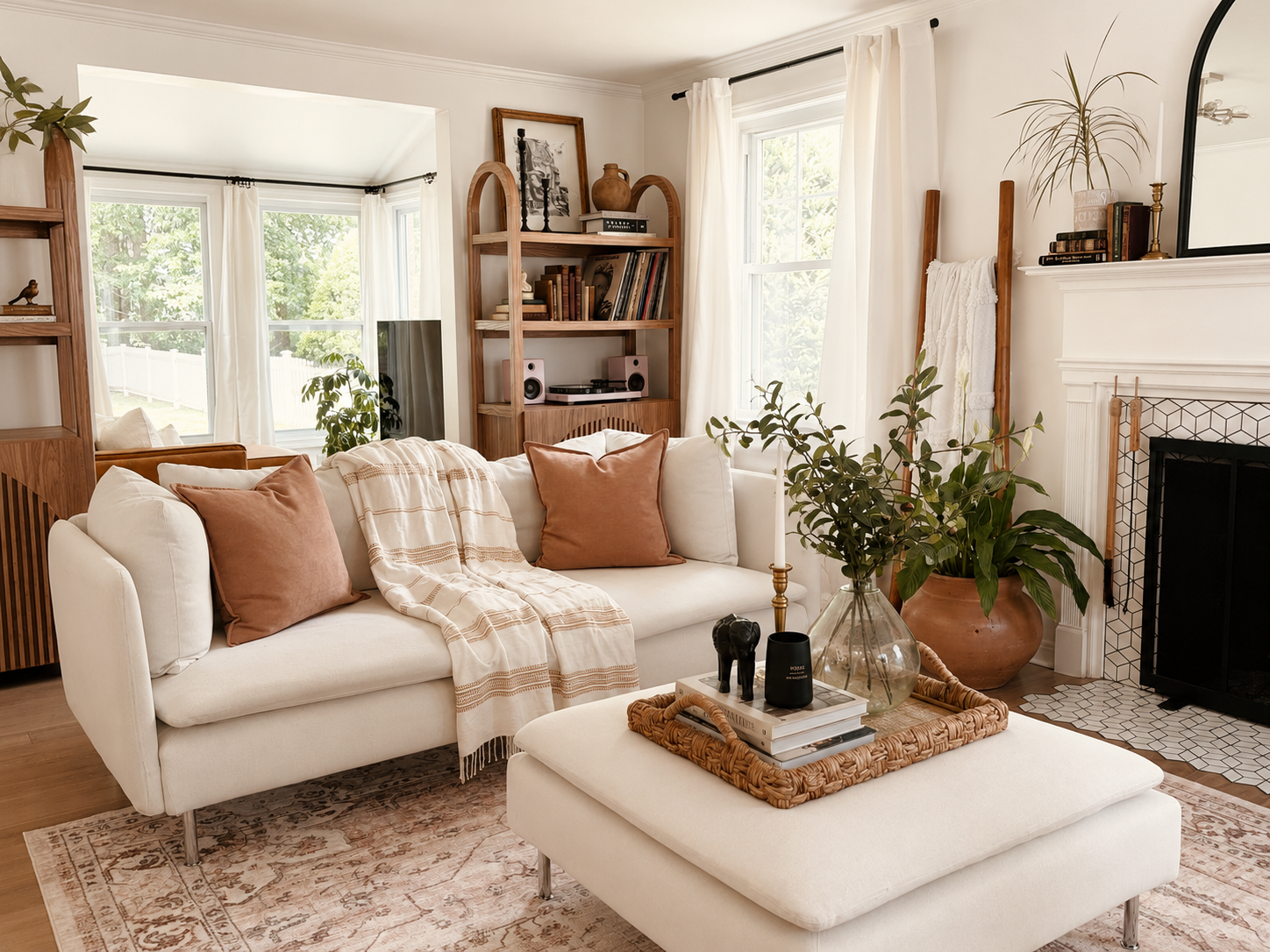
The living room — after years of evolving and making it our own.
“ I had a vision the first time I walked in. The house just didn’t know it yet.”
Nine years, one house, and the design philosophy that became the foundation for Melrose Home & Co.
I’ve always believed that the best homes aren’t created all at once. They’re collected over time — through the things we find, the places we travel, the people we welcome, and the way our lives change.
Our home has been doing exactly that for the last nine years.
When we bought it, I could see the potential immediately. It had good bones, beautiful natural light, and so much character. But it also needed a lot of work.
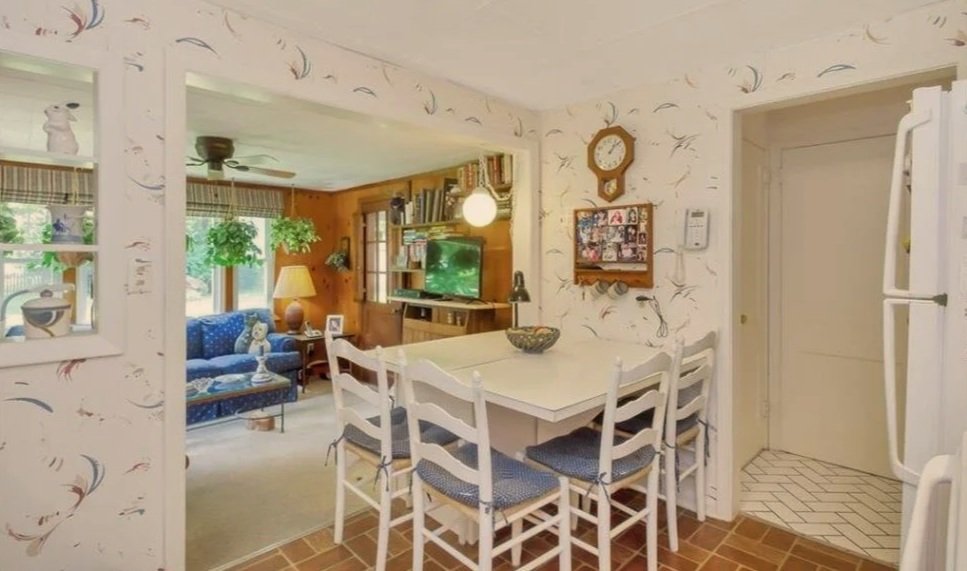
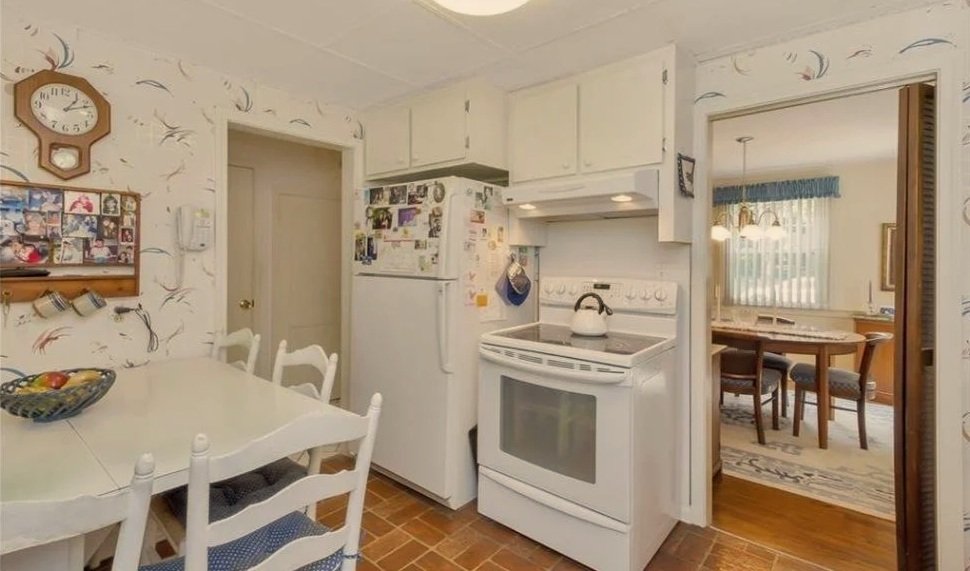
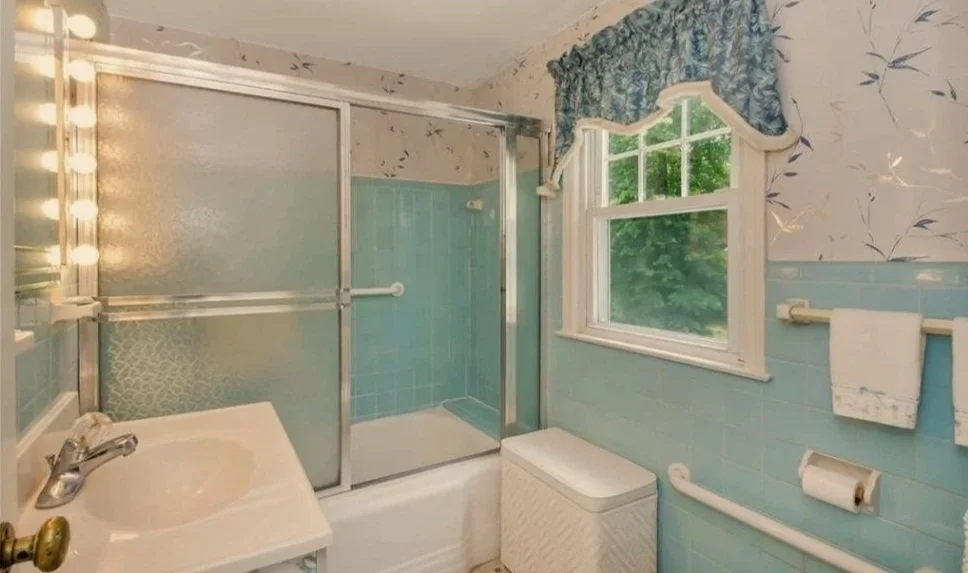
The previous owners had a very traditional style. There was wallpaper throughout much of the house, blue carpet in several rooms, and furnishings that reflected a completely different way of living.
It wasn't my style, but that wasn't really the point.
The house had something worth working with. We just needed to figure out how to make it ours.
CHAPTER ONE
Start With What Matters
We didn't have an unlimited renovation budget, so we had to be strategic about where we spent it.
Most of our early investment went toward the changes that would fundamentally improve the house — moving walls, reworking the layout, and updating electrical and plumbing. The cosmetic work came later.
My dad, a carpenter by trade who spent decades in construction, became my renovation partner during those early years. I learned by doing, and by living with the decisions we made.
That last part turned out to be just as important as the renovation itself.
Because living in a space teaches you things that a floor plan can't.
You start to notice where you naturally walk. Where things pile up. Which rooms you actually use. What feels awkward. What you thought would work but doesn't. And sometimes, what you thought needed to change simply needed to be understood differently.
That became one of the earliest lessons behind the way I approach design today:
Before changing a space, understand it.
CHAPTER TWO
Learning as We Went
Some of our early design decisions were simply a reflection of where my style was at the time.
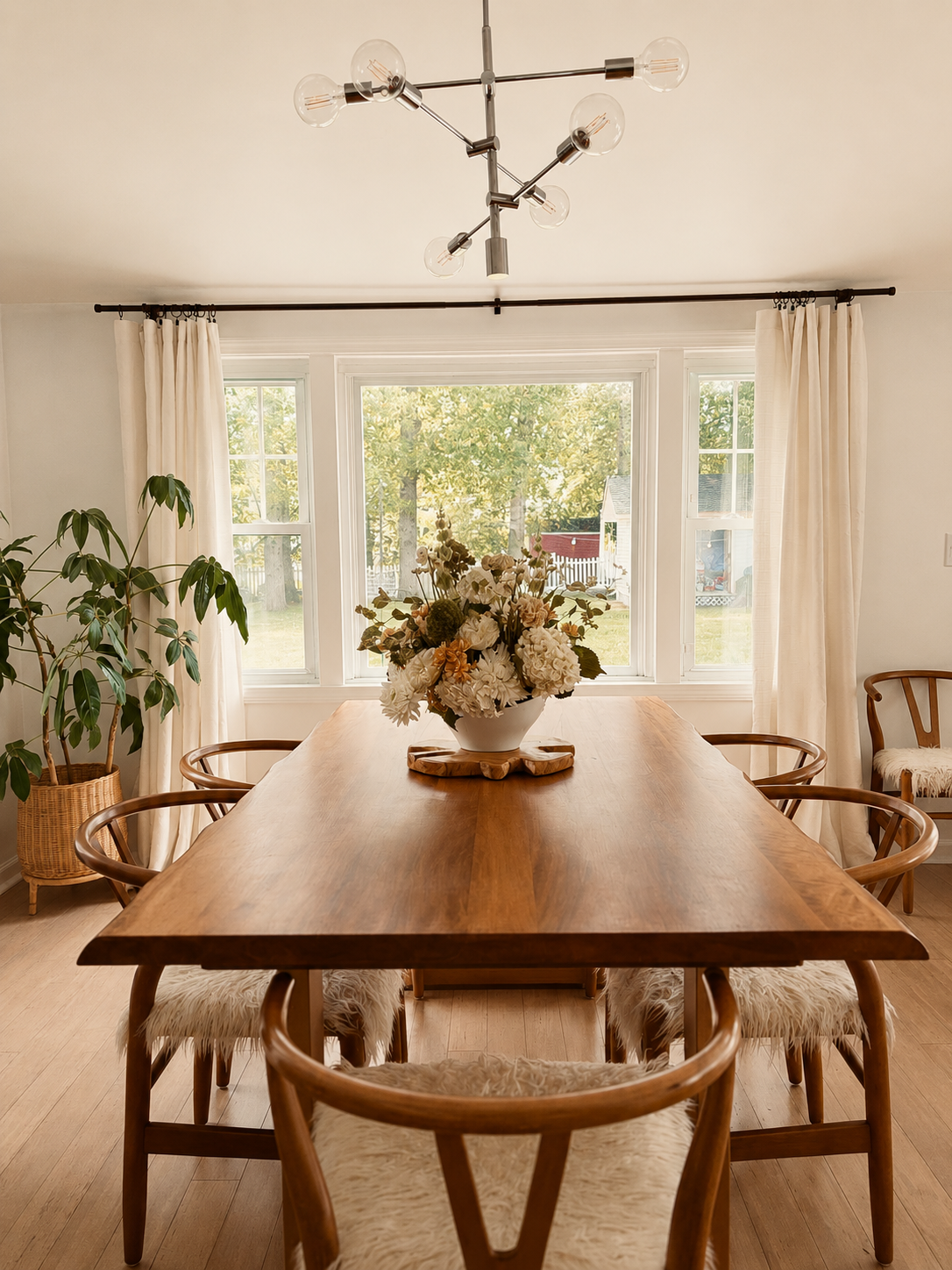
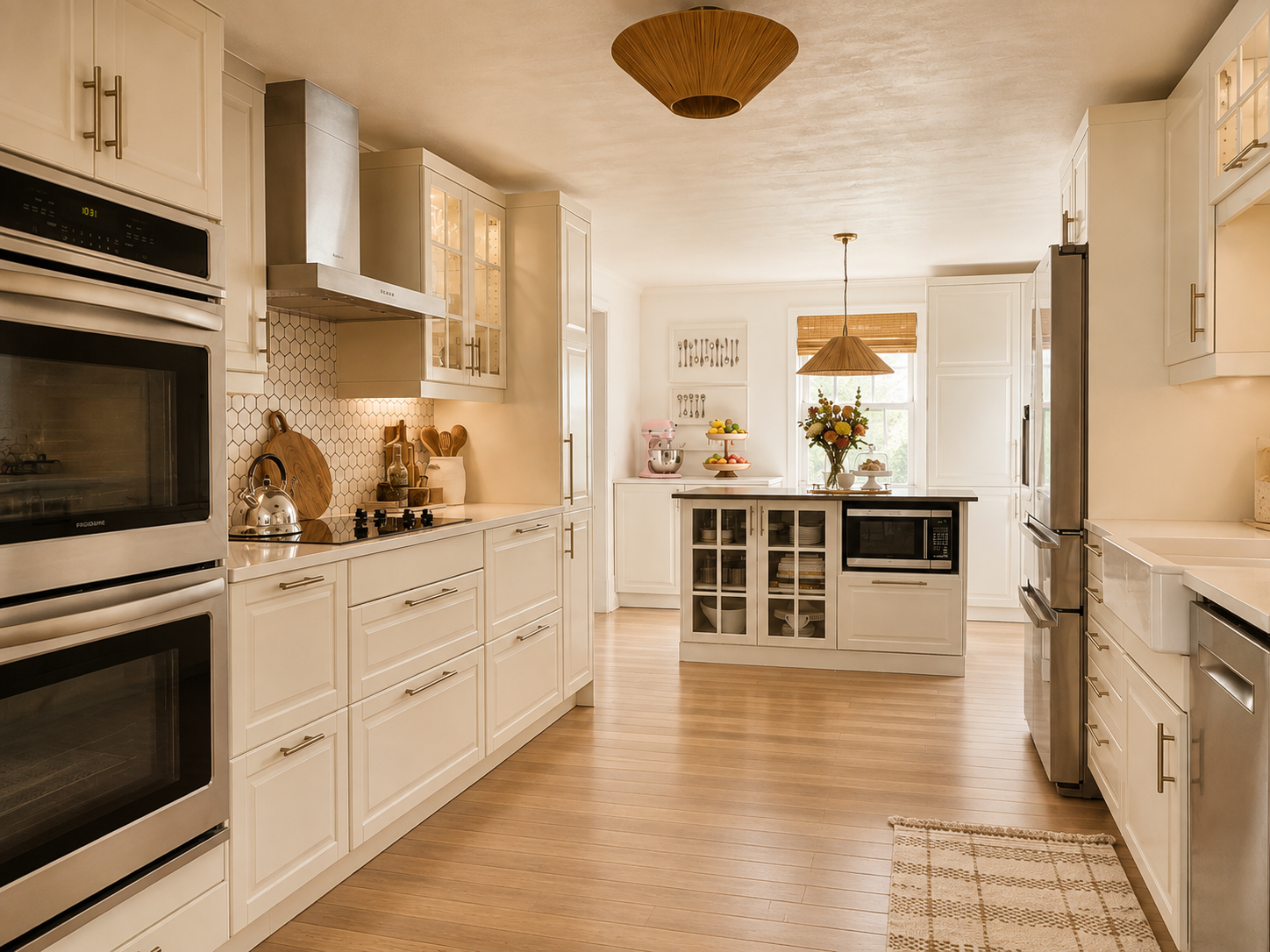
We chose a cooler-toned bamboo floor throughout much of the house. We installed chrome light fixtures and worked with some of the cooler, grayish tones that were popular at the time.
Over the years, my style evolved.
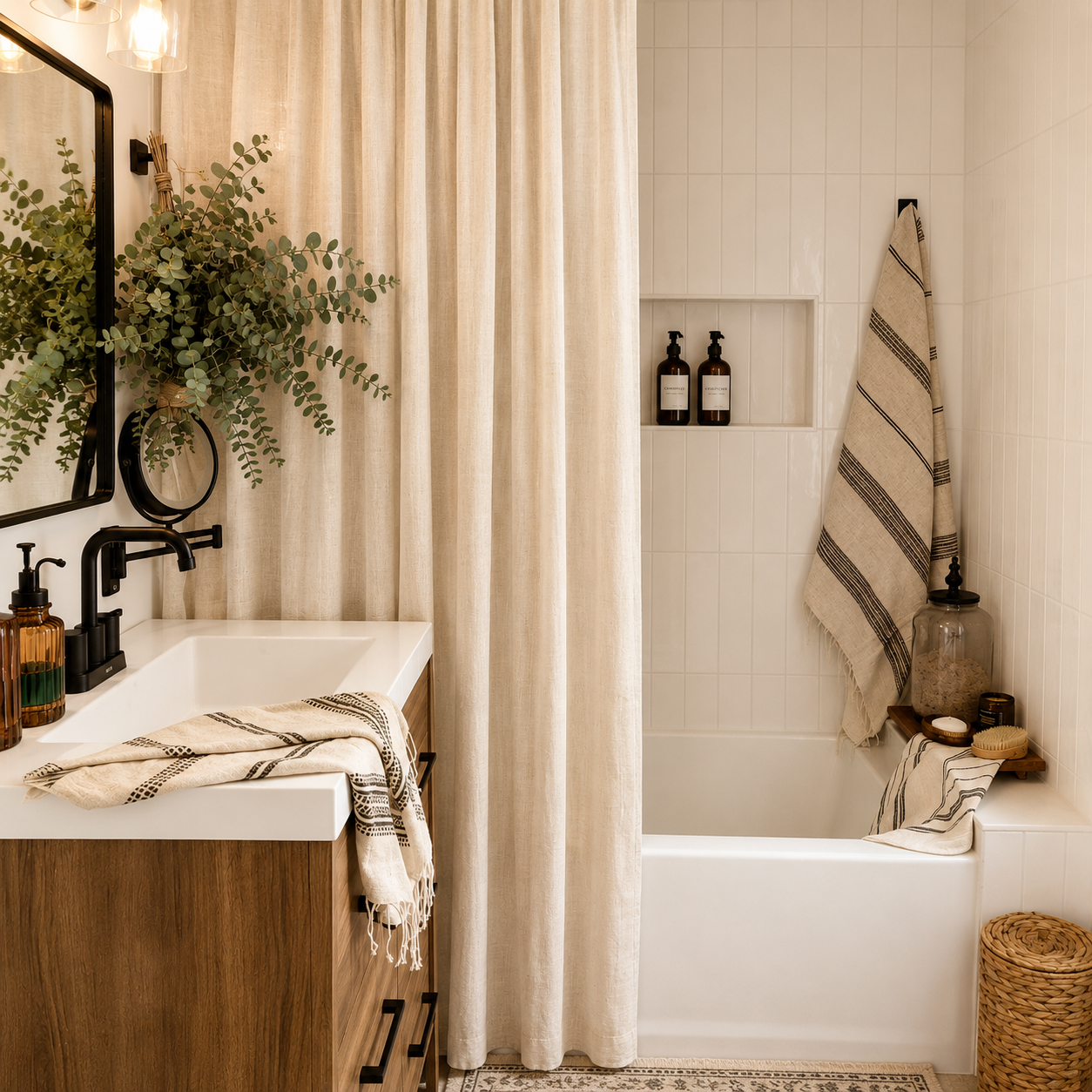
I've become more drawn to warmer neutrals, natural materials, texture, vintage and antique pieces, and rooms that feel collected rather than overly coordinated. I've replaced some of those earlier choices while learning how to balance others with warmer woods, brass, natural textures and softer tones.
The house didn't need to be completely reinvented every time my taste changed.
It needed to evolve with me.
That's something I think about often when designing for other people. Personal style isn't a fixed destination. It changes as we do.
The principles underneath it can remain steady.
I still think about light, scale, proportion, function, flow and how a room should feel. Those principles give me a framework for making changes without losing sight of the bigger picture.
The style can evolve. The principles give it somewhere to go.
CHAPTER THREE
Look at What's Already There
The living room is one of the clearest examples of what I've learned.
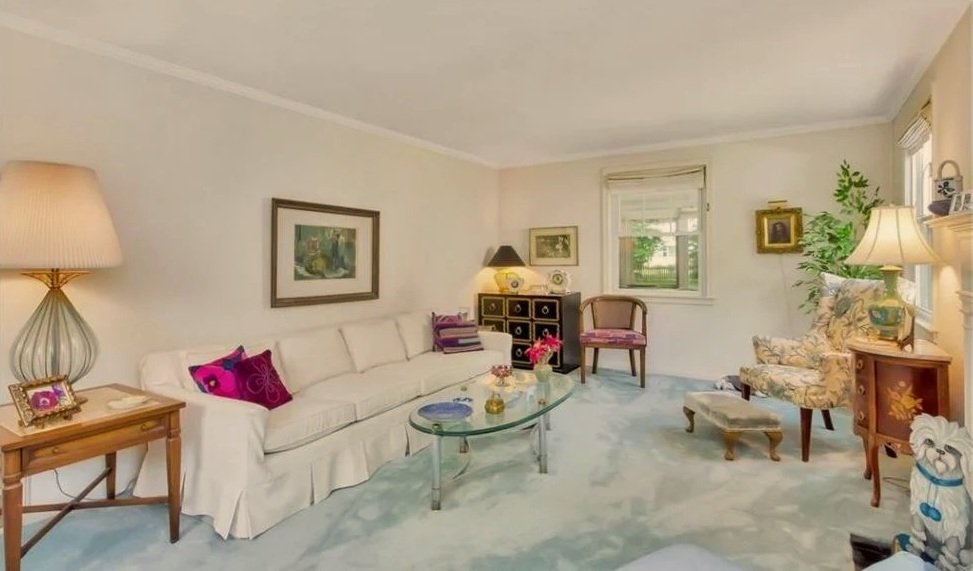
The previous owners' furnishings made the room feel formal and traditional. There was beautiful furniture and plenty of interesting pieces, but the room didn't feel connected or reflect how we wanted to live.
The fireplace was there, but it wasn't functioning as the anchor of the room.
The solution wasn't to fill the space with more.
We reoriented the seating around the fireplace and gradually introduced pieces that brought warmth, texture and personality into the room. Over time, the furniture became simpler, the palette warmer, and the room more relaxed.
What changed most wasn't any single piece.
It was the relationship between everything in the room.
That experience taught me to look at a space differently. Before asking what should we buy?, I started asking:
What is already working? What isn't? What can be moved, edited, repurposed or given a new role?
Sometimes the answer is a new piece.
Sometimes it's simply seeing the room differently.
CHAPTER FOUR
Design for the Life You're Actually Living
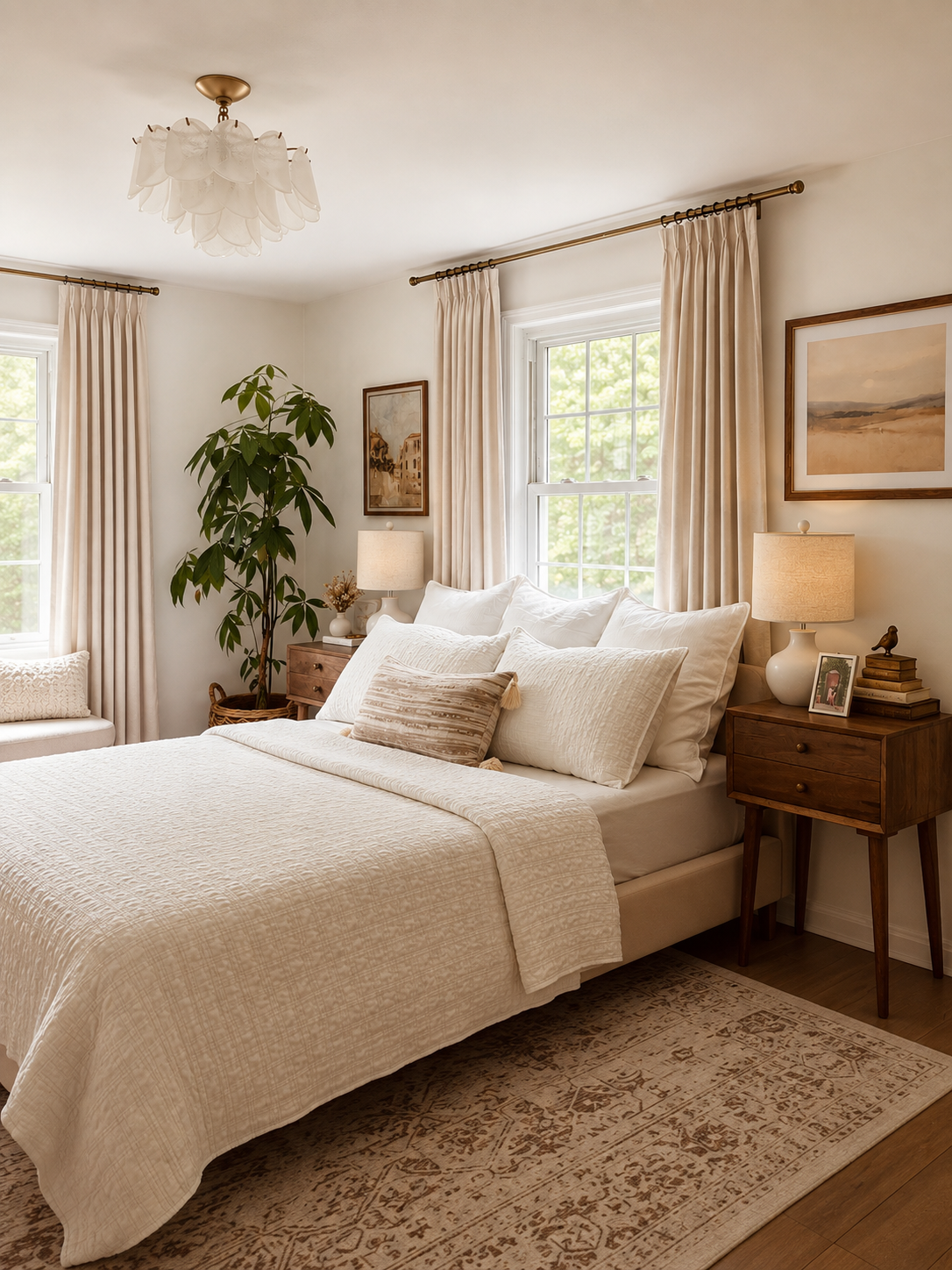
Our primary bedroom has followed a similar path.
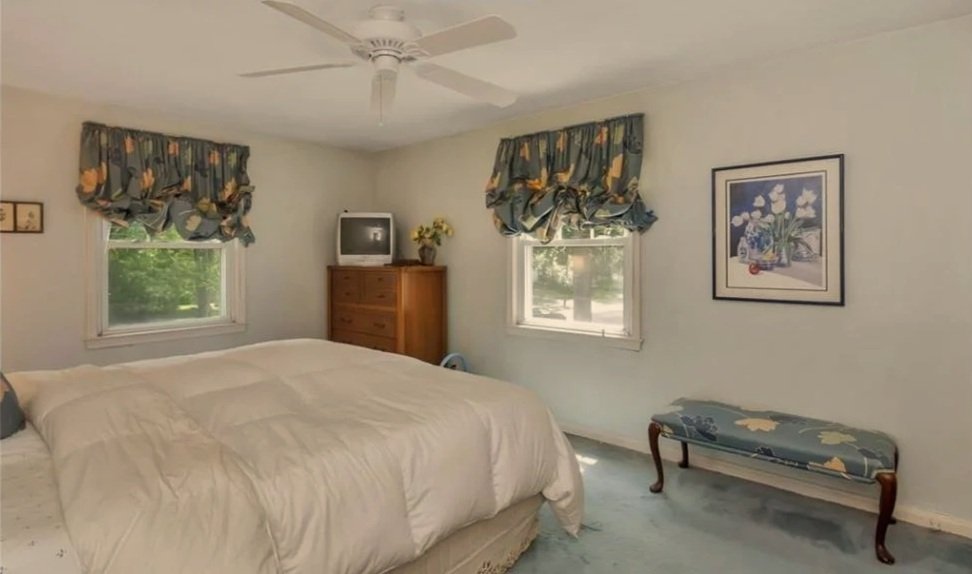
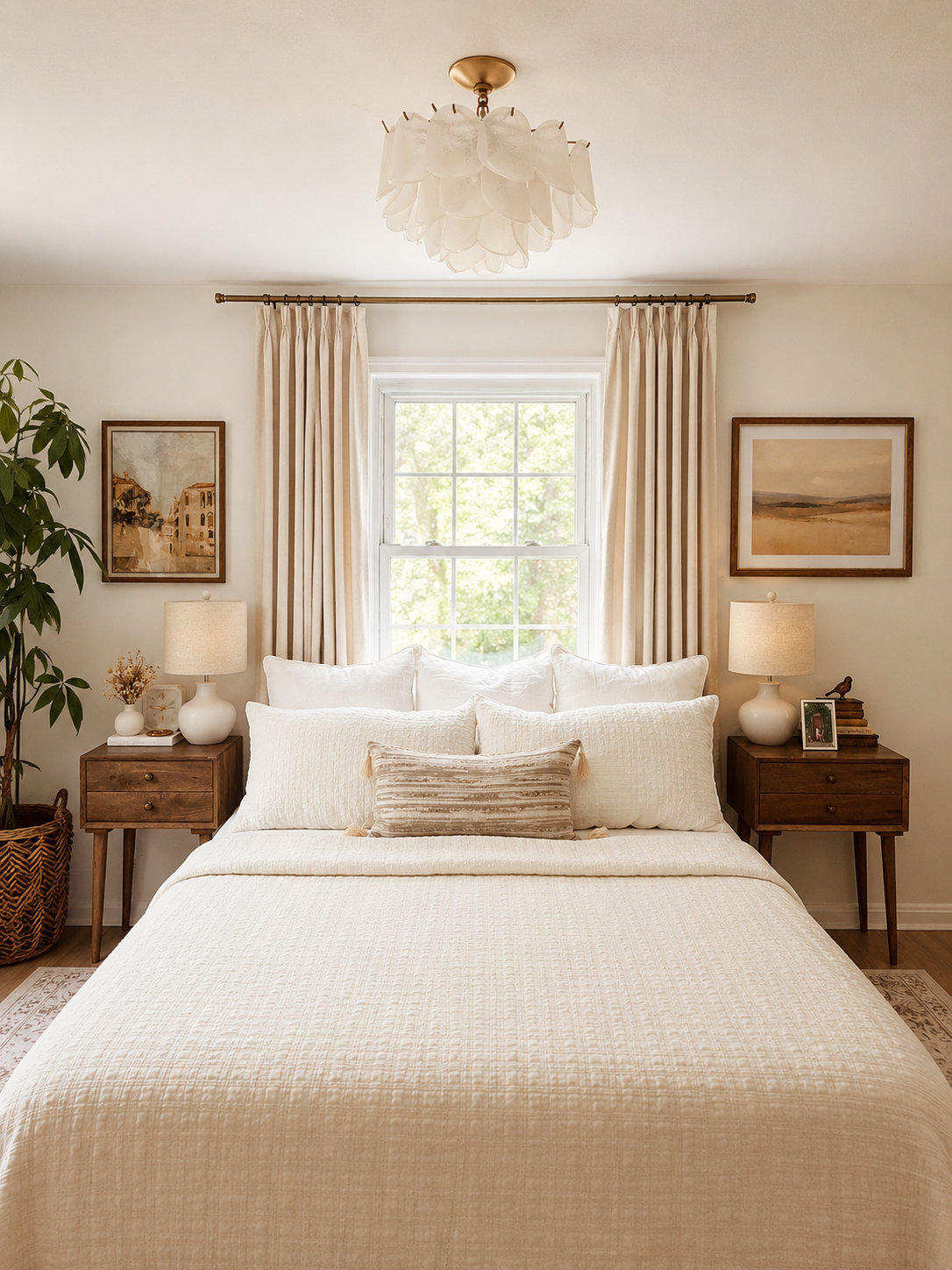
The original room had blue carpet, patterned window treatments and traditional furniture. Over time, we've moved toward a quieter palette, simpler lines, warmer materials and more natural texture.
But even now, I'm still making changes.
The room has taught me that good design isn't necessarily about having more. Sometimes it's about scale. Sometimes it's about proportion. Sometimes it's about creating breathing room or moving one element that has been fighting the rest of the space.
And sometimes the right answer is simply to live with it a little longer.
That's another lesson that has stayed with me:
A home should be designed for the person living in it — not for a photograph.
CHAPTER FIVE
Nine Years Later
Nine years later, our home is still a work in progress.
There are rooms I'd change, things I'd do differently, and projects we're still waiting to tackle. Our budget, priorities and needs have changed over the years, and the house has changed with us.
Our early budget was primarily allocated to the structural changes that would make the biggest difference — moving walls, improving the layout, and updating electrical and plumbing. The cosmetic details happened more slowly.
And I'm glad they did.
Because the house reflects more than one moment in our lives. It reflects where we started, what we could afford at the time, what we knew then, and everything we've learned since.
It isn't a perfectly executed renovation.
It isn't supposed to be.
It's ours.
And nine years later, we're still growing into it.
CHAPTER SIX
From Our Home to the Studio
Somewhere along the way, I realized I wasn't simply decorating our home.
I was developing a way of thinking about design.
I was learning to look beyond what a room looked like and ask why it wasn't working. To understand the people using it before deciding what it needed. To recognize what was already worth keeping. To solve more than one problem with a thoughtful decision whenever possible. And to create spaces that could continue to evolve as life changed.
Those lessons became the foundation of the Melrose Method.
The Method isn't a particular style or a formula for making every home look the same. It's the framework I use to approach each space with curiosity and intention — understanding first, then making decisions based on how the space functions, what the client values, and how they actually live.
It's the same way I've learned to approach my own home.
And that's ultimately why I created the Studio.
The Melrose Method
The Melrose Method is built around a simple idea:
A well-designed home starts with understanding, not decorating.
Before we move something, buy something, or change something, we look at the space as a whole.
What is working?
What isn't?
What's contributing to the problem?
What should stay?
What does the space actually need?
From there, we make intentional decisions — ones that address the underlying needs of the space rather than simply covering them up.
Because the goal isn't to create a home that looks beautiful for a moment.
It's to create one that works beautifully for the people who live there.
CHAPTER SEVEN
Still Growing
I still love our home for the same reason I loved it when we first walked through the door: it has room to become.
Nine years later, I'm still changing things. Still learning. Still noticing what works and what doesn't. Still finding pieces that make me want to rethink a room.
The house isn't finished, and neither am I.
But every change brings it a little closer to the way we want to live.
And that's what I want the Studio to help other people do, too.
Not create a perfect home.
Create a home that feels theirs — thoughtfully, intentionally, and over time.
— Mel, Melrose Home & Co.
melrosehomeandco.com · @melrosehomeandco
THE DESING STUDIO
Ready to start?
Book a complimentary Design Discovery Call — 15 minutes, virtual, no commitment.
We'll talk through your space and figure out the right first step.